
Boosting Science Knowledge via Hands-On Experiential Learning Methods
In the quest to equip students with essential skills for the future, Project-Based Learning (PBL) in Science has emerged as a revolutionary educational approach. This method actively engages students in hands-on, meaningful tasks, fostering critical thinking and problem-solving skills.
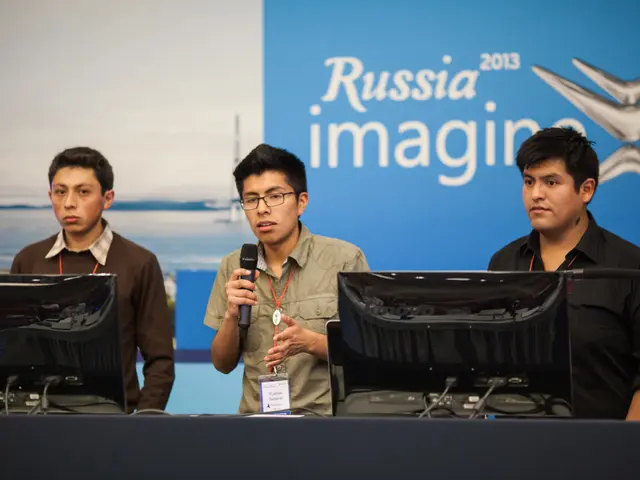
Collaborative learning approaches in PBL emphasize teamwork and collective problem-solving, engaging students in group work to foster communication skills and mutual respect among peers. Teachers play an integral role in facilitating this process, guiding inquiry, providing resources, and offering constructive feedback. Their support must strike a balance, offering enough direction to maintain focus while granting students the freedom to navigate their learning journey.
One effective approach to assessment is the use of rubrics tailored to specific project criteria, providing students with clear guidance and allowing for self-assessment and peer evaluation. This approach encourages students to take ownership of their learning, ultimately enhancing their understanding of complex scientific concepts.
The integration of digital learning tools within PBL in Science enhances student engagement and fosters deeper understanding. Platforms such as virtual laboratories and simulation software enable students to conduct experiments that may not be feasible in a traditional classroom setting, making complex scientific concepts more tangible and accessible. The incorporation of multimedia resources such as videos, interactive quizzes, and presentations further enriches the learning process, stimulating curiosity and encouraging critical thinking.
In PBL, students are presented with complex questions or challenges that require critical thinking and collaboration. Real-world applications can range from environmental studies to public health initiatives, fostering critical thinking and instilling a sense of responsibility and connection to the local environment. Assessing student learning in PBL involves evaluating both the process and the final outcomes of students' projects, focusing on collaboration, creativity, and problem-solving skills.
By involving students in genuine scientific inquiries, education becomes more relevant, challenging students to think creatively about the complexities of global challenges, such as climate change and renewable energy solutions. This method also cultivates essential skills such as teamwork, communication, and organizational abilities.
In conclusion, implementing PBL in science education can be highly effective for fostering critical thinking and problem-solving skills. By aligning projects with curriculum standards, designing relevant and real-world projects, using learning maps, integrating technology and feedback, encouraging collaboration and inquiry, and providing time for planning and reflection, educators can create a comprehensive PBL environment in science classrooms that effectively develops critical thinkers and problem-solvers.
Teacher support is crucial in a project-based learning (PBL) environment as they facilitate the learning process, guide inquiry, and provide resources and constructive feedback, striking a balance between offering enough direction and granting students the freedom to explore. Integrating technology, such as virtual laboratories and simulation software, into PBL promotes a deeper understanding of science concepts, making complex experiments more accessible and enhancing student engagement. Additionally, professional development in education-and-self-development can help teachers effectively implement PBL, equipping them with strategies to design relevant and real-world projects that develop critical thinking skills in students.