
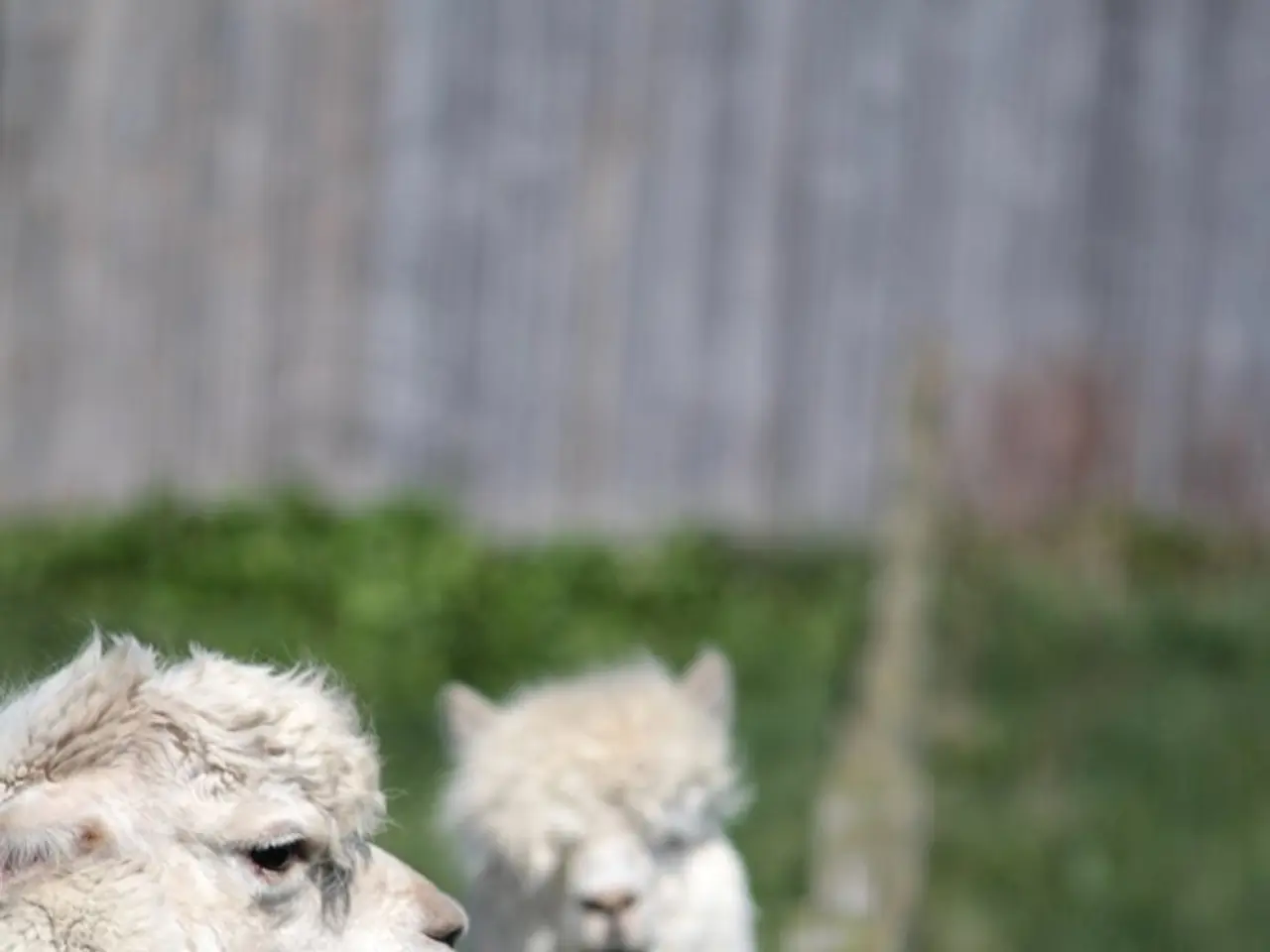
Indian researchers at Kashmir University successfully genetically modify a sheep using CRISPR technology, marking the country's first instance of gene-editing in this livestock species.
**India's First Gene-Edited Sheep: A Leap Forward in Agricultural Biotechnology**
In a significant breakthrough for Indian agriculture, researchers at the Sher-e-Kashmir University of Agricultural Sciences and Technology (SKUAST-Kashmir) have created India's first gene-edited sheep using CRISPR-Cas9 technology. This development, which aligns closely with the goals of enhancing food security and agricultural sustainability in India, promises to revolutionise the livestock sector with potential applications in improving productivity, boosting local economies, and enhancing resilience to environmental stresses.
**Improved Livestock Productivity and Local Economy**
Gene editing offers the potential to create livestock with desirable traits such as faster growth rates, higher meat or milk yield, and better disease resistance. This could significantly increase the efficiency and output of animal husbandry, which is vital for India’s large livestock-dependent rural economy. Developing gene-edited breeds like the Kashmir Merino sheep can revive and strengthen local breeds, helping boost the regional economy by promoting better quality wool, meat, or milk production, thereby increasing farmers' incomes.
**Enhanced Adaptability to Indian Conditions**
Gene editing can introduce traits that make livestock more resilient to local environmental stresses such as heat tolerance, disease resistance, and better feed efficiency. This is critical as many Indian regions face climatic challenges. The gene-edited sheep at SKUAST-Kashmir highlight how precise genetic tools can be applied to improve locally important breeds.
**Reduction in Environmental Impact**
Healthier, more productive animals could reduce the environmental footprint of livestock by lowering methane emissions per unit of product and reducing resource use, contributing to sustainability goals similar to gene-edited crops that consume less water and reduce greenhouse gases.
**Augmentation of Protein Supply and Sustainability**
With growing population pressures, gene-edited livestock can help increase the availability of animal protein, which is essential for nutritional security in India. By making livestock more resilient and efficient, gene editing supports sustainability in farming, especially given the climate challenges and the need to protect traditional breed diversity.
**Technological Empowerment**
The SKUAST-Kashmir initiative exemplifies India’s expanding capabilities in agricultural genetic engineering, potentially reducing dependence on foreign technologies and encouraging indigenous innovation. The university plans to establish India's most advanced reproductive biotechnology center, further solidifying its position at the forefront of agricultural biotechnology.
The gene-edited sheep, created for research purposes, may help address challenges in livestock management, such as improving meat yield, disease resistance, and enabling climate-resilient breeds. This trait, naturally found in European breeds like the Texel, is not present in Indian sheep. The research complied with global biosafety protocols, ensuring ethical and safe scientific practices.
Unlike genetically modified organisms (GMOs), gene-edited animals do not carry foreign DNA, which may make them more acceptable under India's evolving biotech regulations. This could pave the way for wider adoption of gene-edited livestock in India's agricultural sector. The development follows the release of India's first gene-edited rice variety, marking a significant stride in agricultural biotechnology in India.
Lieutenant Governor Manoj Sinha has praised the research team's contribution to scientific innovation and the potential impact of their work on the region's development. Dr. Nazir Ahmad Ganai, Vice Chancellor of SKUAST-Kashmir, stated that this achievement marks a new era in livestock genetics in India. Dr. Ganai commended the researchers and emphasized the university's long-term vision for biotechnology, AI, and a sustainable bioeconomy for a developed India. The research team, led by Dr. Riyaz A Shah, used the CRISPR-Cas9 technique in a controlled lab setting following international biosafety norms.
This groundbreaking achievement is not only a testament to the university's commitment to scientific research but also a significant step towards realising India's aspirations for self-reliance and sustainable development in agriculture. As the research progresses, it is expected that more advancements will be made in the field of agricultural biotechnology, further enhancing India's agricultural sector and contributing to food security and sustainability.
Attaining Self-sufficiency in Education and Technology
The advancements in agricultural biotechnology, as demonstrated by the gene-edited sheep, showcase India's growing proficiency in CRISPR-Cas9 technology—an essential tool in the fields of science, health-and-wellness, education-and-self-development, and technology. This expertise promises to propel India towards self-reliance in genetic engineering and innovation.
Fostering Sustainable Practice in Fitness-and-ExerciseWith the creation of gene-edited animals, there is potential for reduced environmental impact in livestock farming, which aligns with the goals of fitness-and-exercise and environmental conservation. Furthermore, the development of animal breeds resilient to environmental stresses promotes sustainable farming practices and contributes to increased resilience in the face of climate changes.